
Fender Telecaster
The Guitar That Changed Popular Music

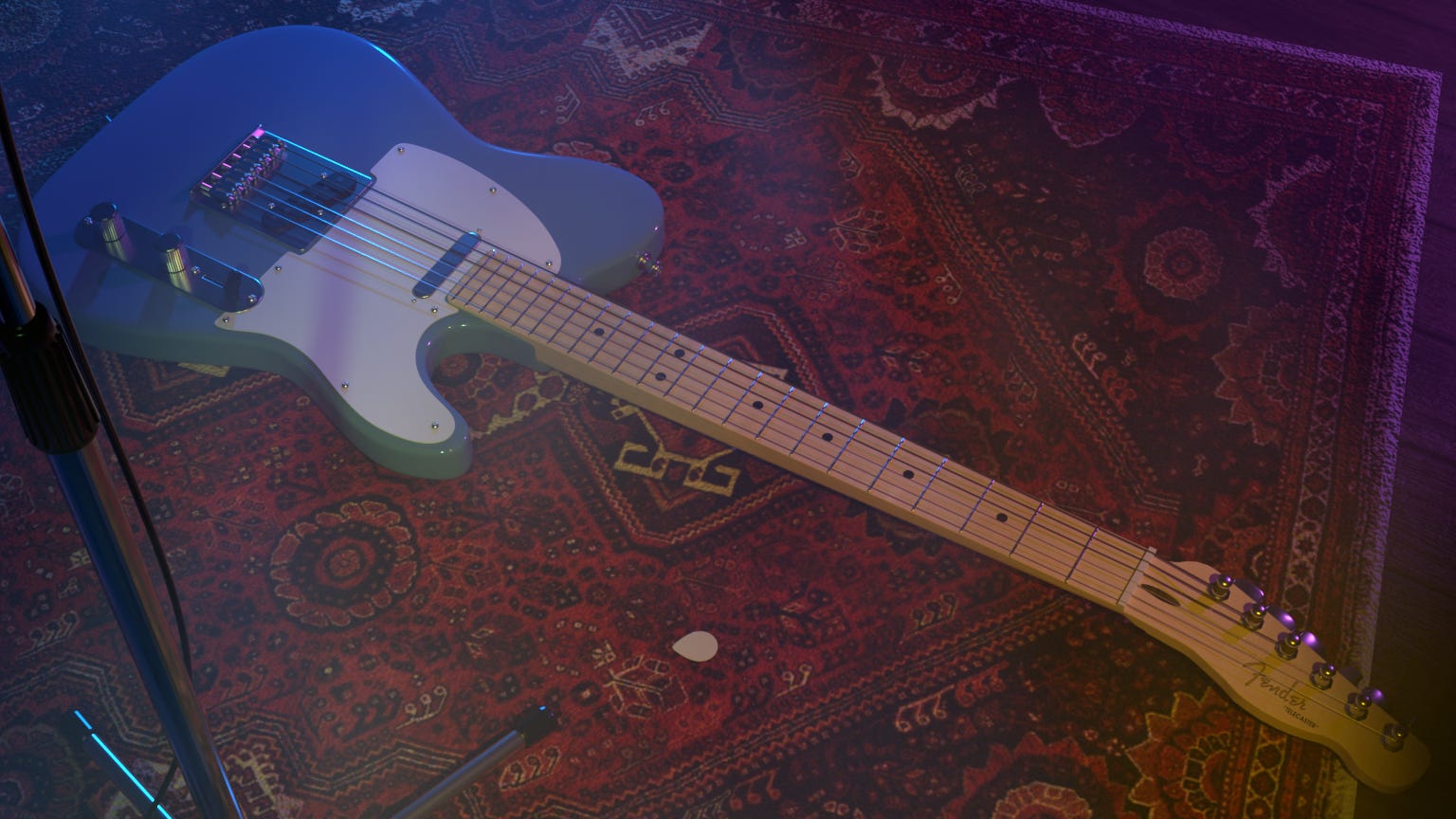
The Fender Telecaster, often simply called the “Tele,” is one of the most influential electric guitars ever made. Produced by Fender, the Telecaster was the world’s first mass-produced, commercially successful solid-body electric guitar. Its simple construction, distinctive sound, and rugged reliability made it a revolutionary instrument that helped shape modern popular music.
From Broadcaster to Telecaster
The guitar was first introduced in 1950 under the name Broadcaster, as a two-pickup version of its sister model, the Esquire, which had only one pickup. However, a trademark conflict with the company Gretsch—who produced a drum kit called the Broadkaster—forced Fender to change the name.
For a short period, guitars left the factory without a model name on the headstock. These instruments are now known as “Nocasters” and are highly collectible. Later in 1951, the guitar received its final name: Telecaster, a reference to the growing popularity of television at the time.
The Telecaster quickly became popular and has remained in continuous production ever since, making it one of the longest-running guitar models in history.
Design and Construction
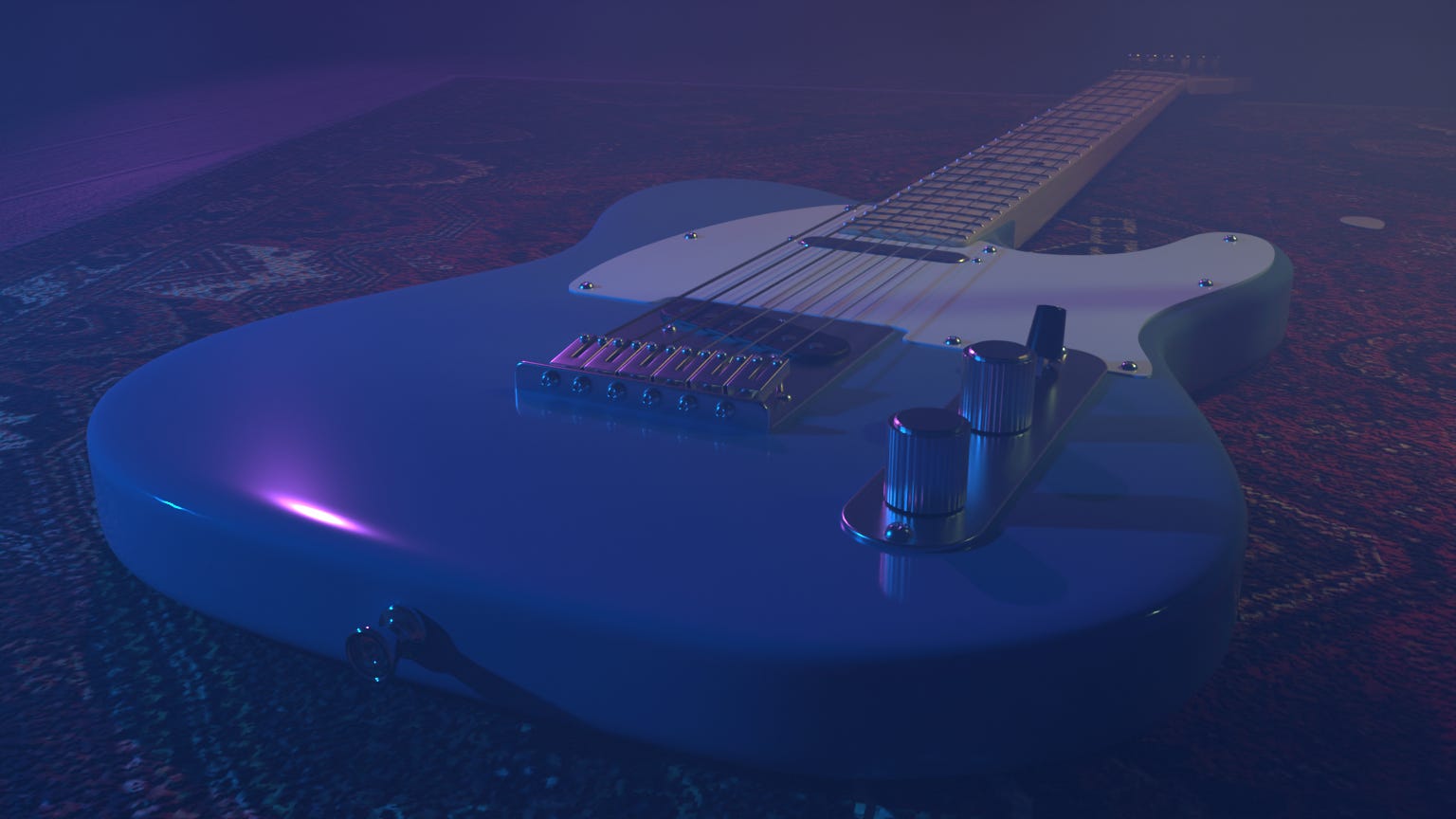
The Fender Telecaster is known for its straightforward and functional design. It features a solid-body electric guitar with a flat, asymmetrical single-cutaway body, typically made from alder or swamp ash. The bolt-on neck is usually made of maple and attached to the body with screws, making it easier to manufacture and repair than traditional glued neck designs.
The headstock is small and distinctive, with six tuning pegs mounted in a straight line along one side. The fingerboard may be maple or rosewood and typically has at least twenty-one frets.
Most Telecasters are equipped with two single-coil pickups, a pickup selector switch, one volume control, and one tone control. The bridge is usually fixed and features adjustable saddles for precise string height and intonation. The output jack is mounted on the side of the body.
Despite minor changes over the decades—such as pickup configurations, neck shapes, and bridge designs—the fundamental design of the Telecaster has remained largely unchanged since the early 1950s.
A Versatile Instrument
One of the reasons for the Telecaster’s long-lasting success is its versatility. The guitar has been used in a wide range of musical genres including country, rock, blues, pop, jazz, punk, indie rock, reggae, soul, and even metal.
Many famous musicians are closely associated with the Telecaster, including Albert Collins, Keith Richards, and Bruce Springsteen, who used the guitar extensively both in the studio and on stage.
A Lasting Design Icon
The Fender Telecaster is not only an important musical instrument but also a milestone in industrial design and manufacturing. Its modular construction, simple electronics, and durable body made it practical, affordable, and easy to produce on a large scale.
More than seventy years after its introduction, the Telecaster remains one of the most recognizable and widely used electric guitars in the world—proof that a simple, functional design can become timeless.
The Fender Telecaster was developed by Leo Fender in Fullerton, California, in 1949 and 1950. In the period roughly between 1932 and 1949, several craftsmen and companies experimented with solid-body electric guitars, but none had made a significant impact on the market. Leo Fender's Telecaster was the design that made bolt-on neck, solid body guitars viable in the marketplace.