
Apple MessagePad
Ahead of Its Time

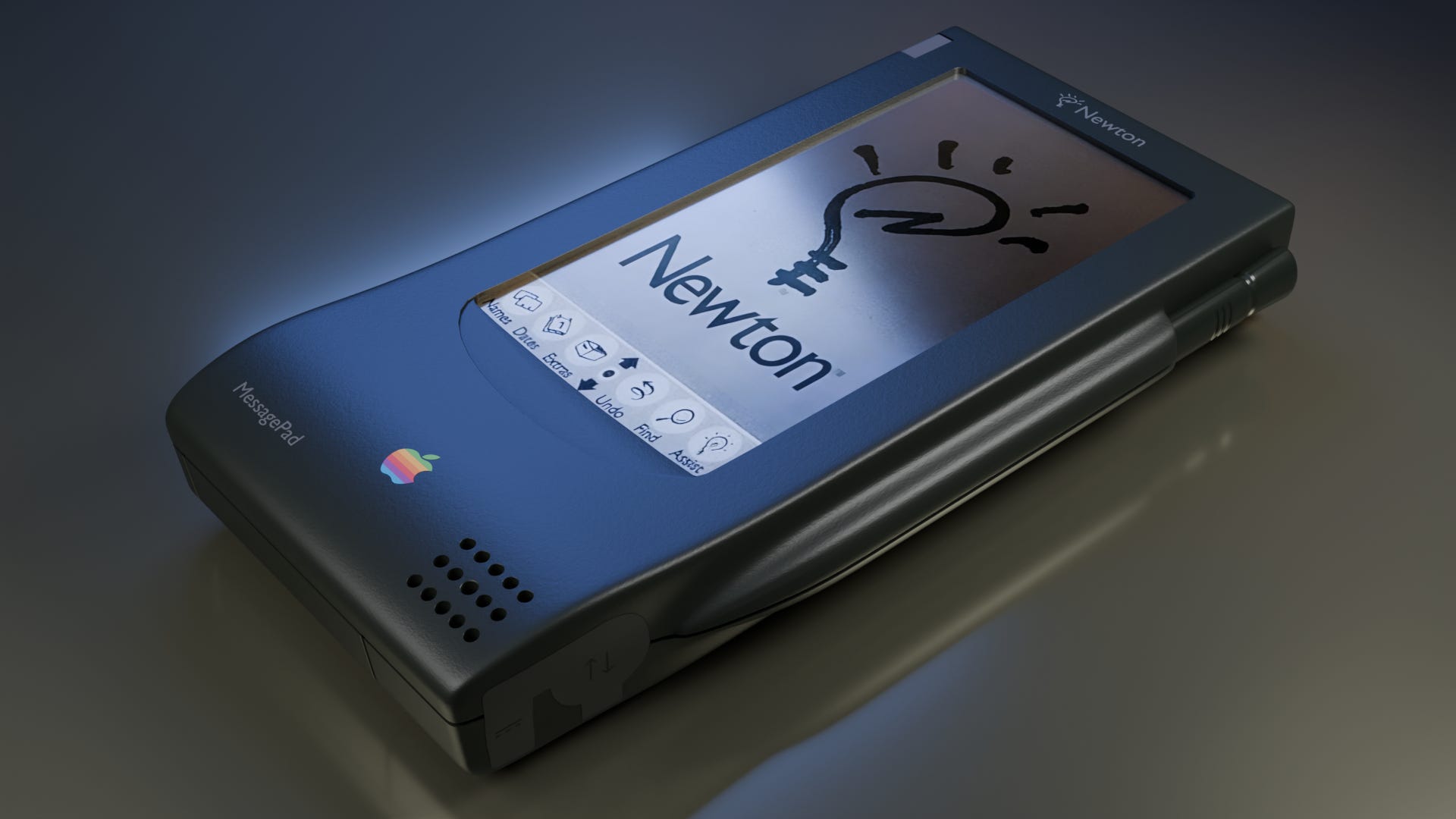
The Apple MessagePad, introduced in 1993 by Apple, was one of the first personal digital assistants (PDAs) and a bold step toward modern mobile computing. Built on the Newton platform, it combined portable hardware with advanced software like handwriting recognition—years before smartphones and tablets became part of everyday life.
A Vision of the Future
Development of the MessagePad began in the late 1980s under Jean Louis Gassee, with key contributions from Steve Capps and Steve Sakoman. The concept was later championed by John Sculley, who introduced the term “personal digital assistant” and unveiled the device in 1992. It officially launched in 1993, priced at $699.
The MessagePad was powered by an ARM 610 processor and ran on Newton OS, featuring stylus-based input and the ability to manage notes, contacts, and calendars in one portable device.
Handwriting and Interaction
Its most ambitious feature was handwriting recognition. Early versions were inconsistent, but later updates—especially with Newton OS 2.0 and 2.1—greatly improved accuracy. The system allowed users to write freely on the screen, edit text with gestures, and combine typed text, sketches, and handwritten notes in a single interface.
The device also supported screen rotation, a virtual keyboard, and external accessories, making it surprisingly flexible for its time.
Technology and Connectivity
The MessagePad offered advanced connectivity options, including serial ports, infrared communication, and expansion via PC Card slots. Users could add modems, storage, and even early wireless capabilities. It ran on standard AA batteries, providing long battery life and easy replacement.
Legacy
Although the Newton platform was discontinued in 1998 under Steve Jobs, its influence is undeniable. The MessagePad introduced concepts—like pen input, mobile apps, and digital organization—that would later become standard in devices like the iPhone and iPad.
Today, the MessagePad is seen as a visionary product: not a commercial breakthrough, but a crucial step toward the mobile technology we now rely on every day.
Newton Soup file system – A Different Way to Store Data
One of the most unique aspects of the Apple MessagePad and the Newton platform was its unconventional approach to data storage. Instead of using a traditional file system with folders and files, Apple introduced the concept of “Soups”—a flexible, database-driven system that treated information in a fundamentally different way.
What Is a “Soup”?
In the Newton environment, all data was stored in simple database structures called soups. Each soup functioned like a single-table database containing multiple entries, which could represent notes, contacts, documents, or other types of information.
Rather than organizing files into folders, the Newton allowed entries to be indexed and searched in various ways. One of the most important features was the use of tags—user-defined labels that acted like virtual folders. This meant a single entry could belong to multiple “categories” without being duplicated, making organization far more flexible than traditional systems.
Stores, Soups, and Packages
The Newton treated its internal memory and any inserted storage cards as separate “stores” (similar to volumes). Each store could contain:
Soups – editable databases holding user data
Packages – read-only objects, comparable to applications or plug-ins
Each soup had a unique ID assigned by the application that created it. For example, an app could maintain separate soups for saved data and results, each identified and managed independently.
The Power of “Union Soups”
A particularly innovative feature was the concept of union soups. If multiple storage cards contained soups with the same ID, the system would automatically merge them into a single unified view.
For the user and applications, this meant all related data appeared as one continuous collection—even if it was physically stored across different memory cards. If a card was removed, the corresponding entries would instantly disappear from view, and apps would update automatically.
This dynamic system made the Newton especially well-suited for portable use, where storage could be added or removed on the fly without disrupting workflow.
A Forward-Thinking System
There were also global soups, such as the System soup, which stored shared data like application preferences. This ensured consistency across apps while maintaining the flexibility of the overall system.
The Soup-based architecture was far ahead of its time. By treating documents as database entries rather than static files, the Newton enabled powerful search, categorization, and data management features that resemble modern tagging systems and cloud-based data structures.
Legacy
Although the Newton platform was eventually discontinued, its innovative data model lives on in many modern systems. Concepts like tagging, dynamic data views, and unified storage across devices echo the ideas first explored with Newton’s Soup system.
In hindsight, the Soup file system wasn’t just different—it was a glimpse into the future of how we organize and interact with information.